
Many homeowners try to take care of their indoor air quality by cleaning the surfaces in their homes. This is good, but it’s just not enough. Most people don’t realize that air duct cleaning is also an essential way to improve the quality of their indoor air but, the question is how often should dirty air ducts be cleaned so we will know that the indoor air we breathe in our home is good enough.
According to the American Lung Association, about one-fourth of Americans are exposed to unhealthy levels of indoor air pollutants. This is due to a variety of factors, including activities like smoking and cooking, as well as dust, dirt and pollen that gets sucked into your HVAC system. This can irritate your lungs and cause a host of health-related issues, including asthma and allergies.
The best way to combat this problem is by maintaining clean air ducts. By doing so, you’ll be able to remove most of the dust, dirt, pollen and other harmful particles that have accumulated in your home’s ventilation system.
How Often Should You Get Your Air Ducts Cleaned?
There isn’t one definitive answer to this question, but based on the Environmental Protection Agency’s recommendations, most people should have their air ducts cleaned once every three to five years. Toxic household dust buildup, bacteria, and germs can build up inside of your ducts and air filters, especially if you have a lot of pets in the home. By having your ducts cleaned professionally every 3-5 years by service providers like The Duct Kings, you can enjoy clean air flow in your living space, increase health benefits and ensure that your system is running as efficiently as possible.
Other considerations to know how often should air conditioning ducts be cleaned:
- The Region where You Live: Where you live can have a major impact on whether you will have mold in your home. Certain climates are more prone to visible mold growth, such as the South where the heat and humidity can make it harder to control. This is why the EPA (environmental protection agency) recommends inspecting for mold more often in these areas.
- Maintenance of your duct work and HVAC system: Mold and dirt can grow in any air conditioning system, but it’s most prevalent in systems that are not used regularly and aren’t well maintained. If you use your air conditioner regularly and frequently change filters, you may only need proper cleaning once every three years or so. However, if no one in your family members uses the HVAC system very often and you don’t change your filters regularly, mold can start growing in your system and dirt can accumulate faster.
- Respiratory problems: Having dirty air ducts in your home and a high amount of household dust can lead to a number of health problems, including allergies and asthma. If you suffer from either of these illnesses or know someone who does, you may want to have the air ducts cleaned once a year.
Is It Time To Have Your Ductwork Cleaned?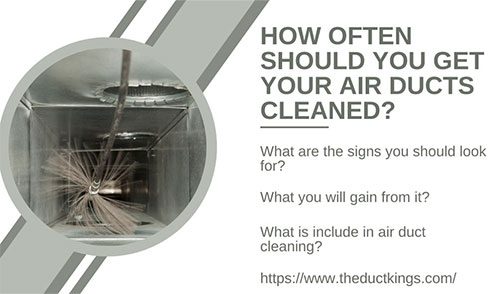
If you’re like most homeowners, you probably aren’t paying a lot of attention to what’s going on in your ducts. But it’s important to know the signs that indicate it’s time for a cleaning. By spotting these signs, you can schedule annual heating and cooling duct cleaning or have an HVAC vent cleaning company like The Duct Kings come out for an inspection.
Here are a few ways to tell whether your ductwork really needs a duct cleaning:
You notice a musty odor when the heating or cooling system in your home working
A musty odor is a sure sign that mold or mildew is growing in your HVAC system. If this occurs, you need to call The Duct Kings immediately and ask us about our mold detection service. Even a small amount of visible mold or mildew can cause serious risk to your health and increase health problems for those who come into contact with it. The longer you wait to have the problem treated, the worse it will become.
You experience unexplained allergies and/or asthma symptoms
If you or someone in your household suffers from allergies, you may notice sneezing and coughing when the air conditioner is on. This is because dust and debris, pollen, pet dander and mold spores can build up in your HVAC system. Studies show that mold in particular can cause allergic reactions. Not only will having your system professionally cleaned help alleviate allergy symptoms, but it can also prevent infections from spreading through the home.
Your energy bill has been unusually high lately
While it’s normal for bills to go up every once in a while, constantly seeing more money come out of your bank account than usual can be a sign that you have some serious issues with your heating and cooling system. Over time, your heating and air conditioning ducts can become clogged with dirt and debris.
This prevents the system from functioning at energy efficiency and can lead to extreme energy loss. Clogged ducts will also cause your system to work harder in order to maintain a comfortable environment in your home. This causes the unit to be turned on and off more often, causing inefficient use of energy.
Your Furnace Is Not Working Efficiently
Your heating and cooling furnace’s blower is responsible for distributing heated air throughout the house. But if the ducts that lead to each room are dirty, the blower can’t do its job properly. When the furnace circulates air that has been filtered through dirty ducts, it becomes contaminated. This means you’re breathing in dust and debris, dirt and other particles with every breath.
Clogged air ducts can reduce the total amount of warm air produced by the furnace and heat exchangers, which means blowing cold air sometimes. It may also result in uneven temperatures throughout the house, as a clogged system can’t distribute the heat properly.
If you see any of the signs listed above or you still ask yourself how do I know if my air ducts need to be cleaned, it’s probably time to call an HVAC system professional for help. If you live in a dusty area and have pets, you could also be seeing signs of buildup from their hair. With regular duct cleaning, you can keep your system running at peak efficiency and save money on energy over time.
Tired of breathing bad air? Let The Duct Kings Make it Better!
If you have been experiencing health issues throughout the year, it may be due to the particles that are being circulated throughout your air ducts. To keep your family healthy and safe, it is important to have your air ducts cleaned regularly by a professional HVAC cleaning company like The Duct Kings. We are here to make sure you get the highest quality provider service at a price you can afford. We offer reasonably-priced duct cleaning services that will improve the air quality in your home and protect your family from harmful pollutants. We want you to breathe easy!
With each one of our duct cleaning services, we will clean all the cooling system components including the metal ducts, air filter, heat exchanger, cooling coils, air handling unit, supply registers, fan motor, air vents, and condensate drain pans, blower fan and all the duct surfaces.
Why Is It Necessary to Hire a Professional Air Duct Cleaner like The Duct Kings?
While it’s important to clean your air ducts regularly, it’s equally as important that you hire a professional service provider to do so. Trying to clean air ducts yourself is a big no-no for a number of reasons, including cost savings and more importantly, the fact that you don’t want to risk damaging your heating and cooling HVAC system. If you try to tackle this job yourself, you could make things much worse if you don’t know what you’re doing-it’s easy to spread the mold around and contaminate other areas of the house.
When it comes to cleaning the interior of your heating and cooling air duct system, the pros at The Duct Kings duct cleaning company have all the tools necessary to get the job done properly—from high-powered vacuum cleaners and brushes to specialized disinfectants and even UV lights that kill off any lingering spores.
Our professionals not like other duct cleaning companies can check for signs of mold growth in your system and make sure they remove any that they find before it has a chance to spread.! Our HVAC professionals have extensive experience providing residential and commercial air duct cleaning services.
We can safely remove pollutants from all areas of your home without damaging walls or carpeting before it has a chance to spread and reduce your air quality problems in no time. Our local duct cleaning service can be scheduled at a time that works best for you.
With customer satisfaction as our number one priority, we work hard to make sure every job we perform meets or exceeds your expectations. Our expert cleaners are among the most highly trained professionals in the industry and use the latest tools and equipment to ensure efficient, effective results.
Trying to determine if you need an HVAC cleaning or trying to find a reputable company? Call us today at (866) 632-6270!